
Scrolling into the Manosphere: How Online Misogyny Shapes Everyday Life
Written by Eve Copeman and Sophie Lennox

Louis Theroux’s latest documentary, Inside the Manosphere, offers a glimpse into the online subcultures shaping societal attitudes about masculinity and gender roles. Theroux follows influencers such as HS Tikky Tokky, Justin Waller and Myron Gaines as he seeks to understand their misogynistic messages and how they are connecting with their online audiences.
Far from representing new attitudes towards women, these influencers follow a blueprint popularised by the self-proclaimed misogynist Andrew Tate, who rose to prominence on social media in 2022. Content promoting ‘hustle culture’, a flashy lifestyle and the inferiority of women is part of a business model appealing to hundreds, if not thousands of other influencers.
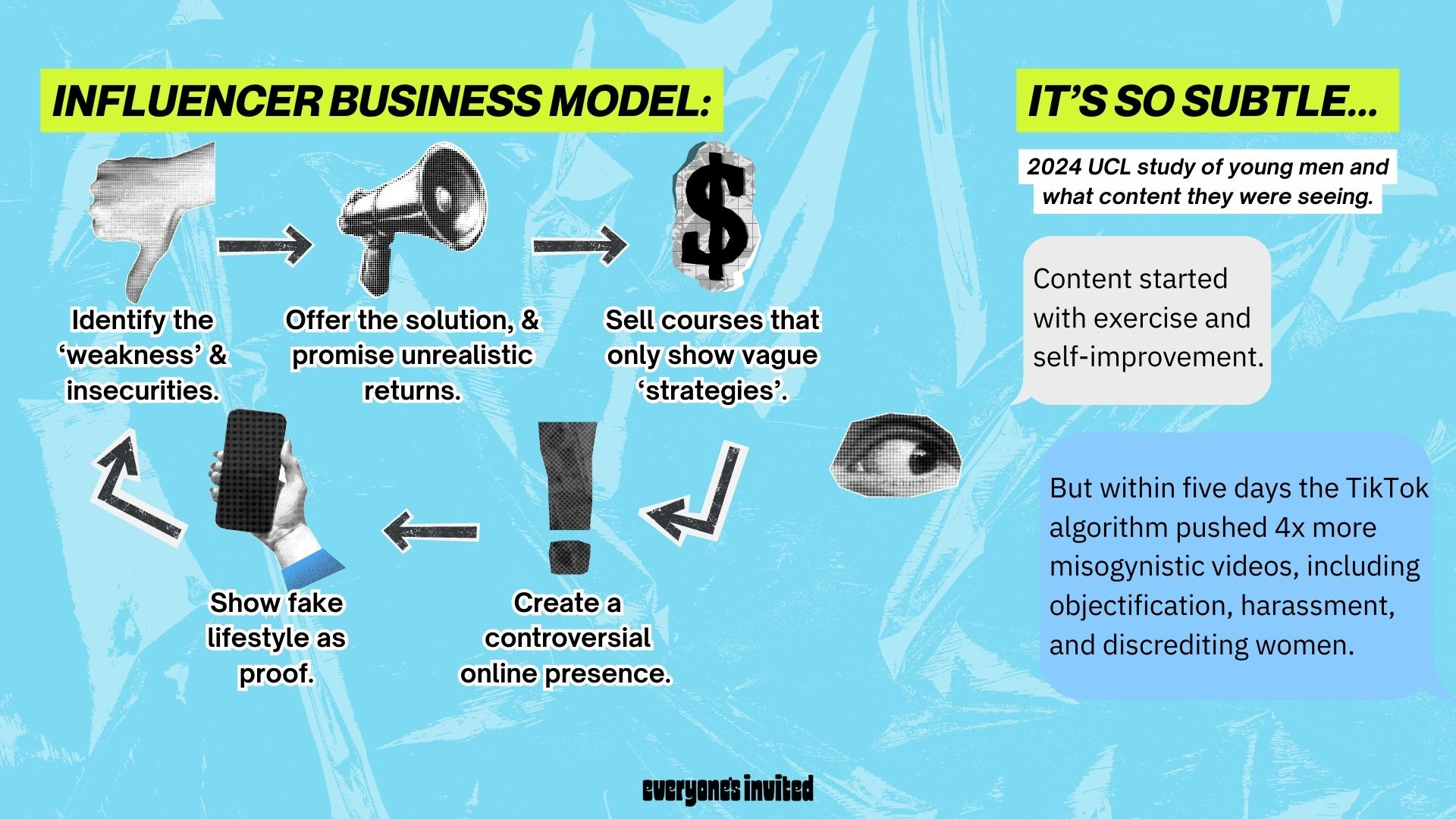
Its key figures profit from exploiting young men's insecurities. As with many forms of radicalisation, extreme ideologies, such as misogyny and homophobia, are often not immediately obvious. Manosphere figures prey on the insecurities and perceived ‘weaknesses’ of young men, offering attractive content and advice on fitness, self-improvement and wealth building and subtly drawing them into more harmful ideas about women and masculinity. Many young people describe being introduced to influencers within the manosphere via this seemingly innocuous content, only later to be exposed to misogynistic and extreme messages. A deep dive by The Guardian into the manosphere’s appeal to young men offers insight into this insidious process: their analysis of 640 of Tate’s videos found that 43% mentioned wealth and getting rich, 34% discussed sports cars, and 21% spoke about women. This is intentional. Derogatory comments about women and misogynistic viewpoints are bookended by content that initially might seem appealing, and crucially, positive to young men. This technique is a phenomenon that four years ago, we at Everyone’s Invited termed the ‘misogyny sandwich’.
Once viewers have engaged with content created by these influencers, social media’s algorithms do much of the heavy lifting, ensuring that viewers continue to be exposed to this kind of content. We know that algorithms not only show viewers content that will likely be of interest to them, but they also prioritise viewer engagement. Apps can often prompt engagement by promoting controversial, extreme, or divisive content that promises to keep viewers hooked, and the evidence backs this up. In 2024, UCL researchers set up TikTok accounts representing different typologies of teenage boys. After 5 days of watching videos on these accounts, TikTok algorithms presented viewers with four times as many videos containing misogynistic content.
The final stage of the manosphere’s business model is monetisation. In Theroux’s documentary, HS Tikky Tokky all but admits that this is his primary goal, declaring: I’m doing it for the money and I’m not living for other people, I’m living for myself, regardless of the moral implications for young men that follow him. Manosphere figures sell ‘solutions’ to perceived male grievances, offering vague strategies to their issues, like Tate’s former $147-per-month Hustler’s University subscription or HS TikkyTokky’s online trading courses. In many cases, these programmes function essentially as pyramid schemes.
These influencers often position women and feminism as the root causes of the perceived injustices that men face - their parents’ divorce, their inability to find a girlfriend or to be financially successful - and these ideas, too, are packaged, and sold to men in the form of books like Myron Gaines’ Why Women Deserve Less, fuelling hatred for women and the steps that society has taken towards gender equality. And yes, the book is rated 4.6/5 on Amazon - a chilling reminder of the real-world reach and influence of the manosphere.
While much of the public conversation about the manosphere focuses on the men who produce this content and the boys who consume it, it is crucial to acknowledge the direct effects of its narratives on women and girls. Discussions about these movements can sometimes overlook those who did not choose to be part of them but must nonetheless live with their consequences. Online misogyny does not remain confined to the internet. The attitudes promoted by manosphere influencers shape how young men view their female peers, teachers and partners, contributing to hostile environments both online and offline. We have seen this for years in our programmes: teachers finding “Make Me a Sandwich” written on their office doors, female teachers dismissed, and girls disbelieved. For survivors of sexual violence and harassment, the normalisation of misogynistic rhetoric can be particularly harmful, reinforcing cultures that dismiss women’s experiences and undermine efforts toward gender equality.
At Everyone’s Invited, we are acutely aware of how these narratives are reproduced in the classroom and the harm that they are causing. When we launched our online misogyny workshops in UK schools four years ago, even then, Andrew Tate didn’t feel relevant to the young people we were speaking to, he was old news. This remains true. It is the microinfluencers who have emerged from and profit off Tate’s business model that take centre stage in young people’s online worlds.
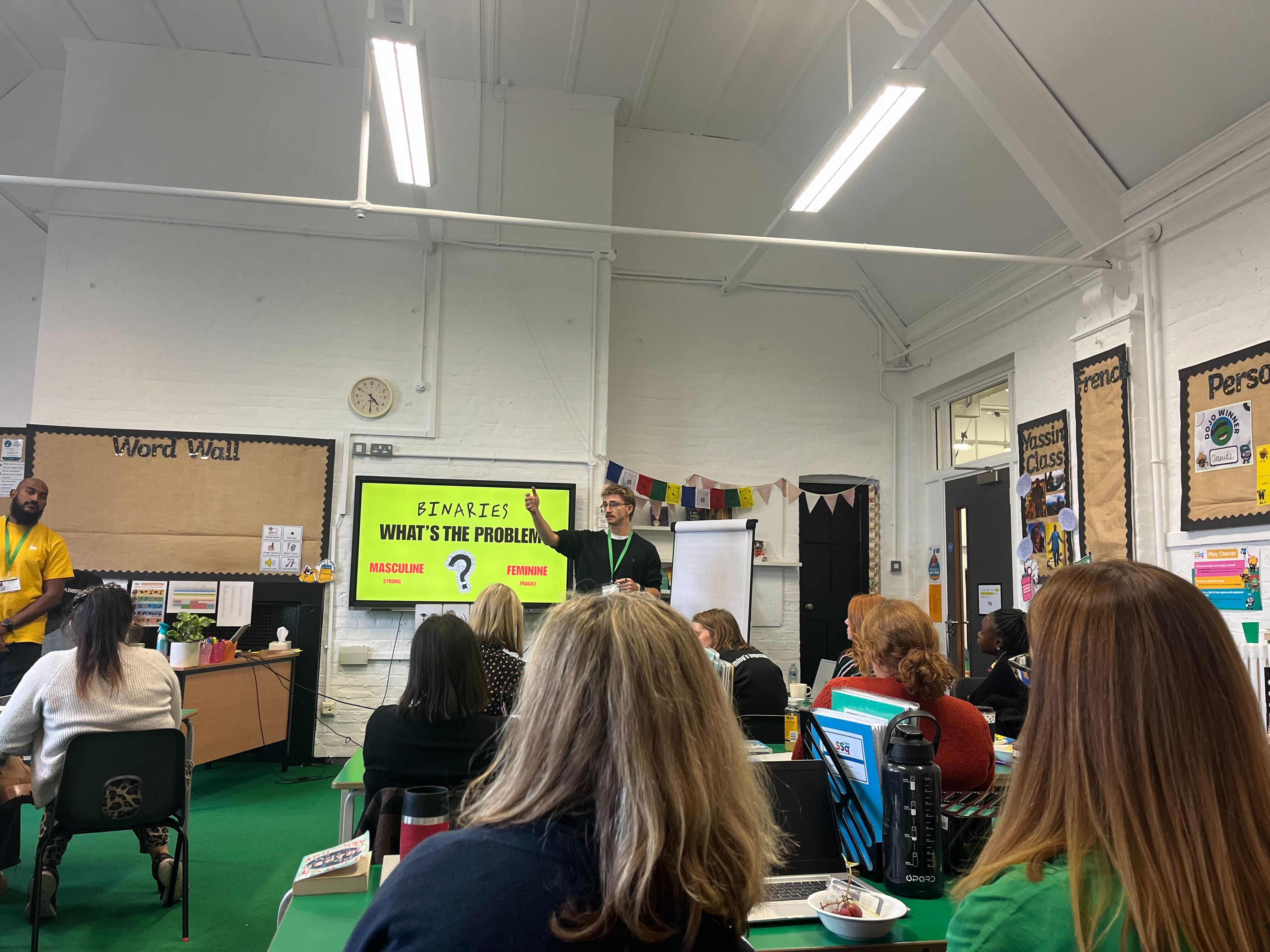
It is critical for us as educators to stay abreast of online trends and movements affecting young people and to listen to and learn from their experiences. By understanding the narratives that shape their online experiences, we can evolve our approach and ensure we are educating in the most impactful and relevant way.
Improving digital literacy across society, amongst young people, parents, adults and teachers, is crucial if we are to understand the realities of young people online and the figures and narratives that shape them. This includes recognising the authority of influencers within the manosphere and the ways in which their messages trickle through our feeds on algorithm-driven platforms like TikTok.
If there is one thing you take away from Louis Theroux’s documentary, it should be the importance of engaging in young people’s worlds. There is a need for open and honest conversations that acknowledge the real-life harm people are too often exposed to online. As the boundary between young people’s online and offline worlds continues to blur, these attitudes increasingly shape real-life relationships, classrooms and communities. Understanding one world increasingly means understanding the other.
So talk to your friends, talk to your family, open up conversations. It has never been more important.